
Togo has introduced a new Environmental Compensation Fee (DCE) as part of the country’s updated environmental legislation. The measure applies to a number of sectors,...
News
BUDD News
Ebola Outbreak in DR Congo
Update: Ebola Outbreak (29 May 2026)
Global & Regional Situation (DRC & Uganda)
The current epidemic is caused by the rare Bundibugyo variant, for which there is currently no approved vaccine or specific targeted therapy.
The World Health Organization (WHO) has declared a Public Health Emergency of International Concern.
• Democratic Republic of the Congo (DRC): Since the outbreak in the northeastern Ituri province on May 15, the virus has since expanded to Nord-Kivu and Sud-Kivu provinces. As of late May, authorities report over 1,000 suspected cases and more than 200 deaths.
• Uganda: Seven cases and one death have been confirmed, primarily in the capital, Kampala. Most cases were linked to the initial infections originating from the DRC.
As a result, Uganda has officially closed its land border with the DRC for a duration of a total of four weeks. Exceptions are granted only to authorized Ebola response teams, humanitarian aid, cargo/food transport, and security forces.
Furthermore, Uganda implemented a mandatory 21-day quarantine for any individuals arriving from the DRC and halted all public transit across the border.
Meanwhile, the WHO has criticized these border closures, warning that shutting official crossings pushes travelers to use unmonitored and unofficial routes, which increases the risk of spreading the virus.
North American Protective Measures
Both the United States and Canada have enacted strict border controls and entry restrictions to protect the public, although the immediate risk in North America remains low.
United States Measures:
United States Measures:
– The CDC and Department of Homeland Security (DHS) have activated enhanced public health travel screenings.
– All air passengers arriving from the DRC, Uganda, and South Sudan are being rerouted to arrive at four specific hubs: Washington-Dulles (IAD), Atlanta (ATL), Houston (IAH), or New York (JFK).
– The CDC implemented entry restrictions on non-U.S. passport holders who have visited the affected countries within the previous 21 days.
• Canada :
– Effective May 27, 2026, Canada has temporarily suspended immigration documents for residents of the DRC, Uganda, and South Sudan for 90 days. This means foreign nationals cannot travel to Canada right now, even with previously approved visas or electronic travel authorizations (eTAs).
– From May 30, 2026, Canadian citizens or permanent residents returning from these regions must undergo a strict 21-day quarantine. Those showing symptoms will be isolated immediately at a hospital.
What Ebola actually does to the Body
The Ebola virus causes severe systemic inflammation, tissue damage, and coagulation issues throughout the body. According to the CDC, the progression of the disease typically moves through several stages:
• Incubation Period: can take anywhere from 2 to 21 days (averaging 8 to 10 days) after exposure to infected body fluids. A person is not contagious until symptoms appear.
• Early Stage (“Dry” Symptoms): Sudden onset of flu-like symptoms including high fever, severe headache, muscle and joint aches, debilitating fatigue, and a sore throat. At this stage, it can easily be mistaken for malaria or influenza.
• Advanced Stage (“Wet” Symptoms): After 4 to 5 days, the virus heavily impacts the gastrointestinal tract, leading to severe watery diarrhea, vomiting, and intense abdominal pain.
• Hemorrhagic Manifestations & Shock: The virus damages the endothelial cells lining the blood vessels, causing them to leak. While not universal, roughly 40% of patients experience unexplained bleeding (internal bleeding, blood in stool and/or vomit, bruising, or bleeding from the eyes and gum lines). A widespread red, peeling skin rash may also develop.
• Critical Phase: In fatal cases, severe fluid loss combined with internal bleeding can lead to multiorgan failure, septic shock, and death, typically occurring between days 6 and 16 of the illness. The Bundibugyo strain currently driving the outbreak carries an estimated mortality rate of 30% to 50%.
22 May 2026
Following the World Health Organisation´s (WHO) declaration that the current Ebola outbreak in Democratic Republic is a public health emergency of international concern (PHEIC), the Democratic Republic of the Congo (DRC) and Uganda are working to limit the spread of the disease which has caused at least 131 confirmed deaths.
The crisis is heavily concentrated in the north-eastern Ituri and North Kivu Provinces.
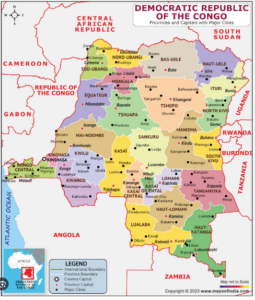
However, international health monitoring has confirmed that the disease has crossed international borders, with 2 cases and one death now detected in neighboring Uganda. Local and international efforts to contain the outbreak are facing massive disruptions due to ongoing conflict in a volatile security environment, extreme poverty, local beliefs and a widespread lack of trust in health organisations.
BUDD’s local offices report that no cases have been confirmed in the capital, Kinshasa, or in the country’s international Congo estuary and river ports in western DR Congo (Banana, Boma, Matadi).
In a country with very poor roads and few airports, the river Congo and its tributaries play a vital role in the domestic carriage of both people and cargo, providing a potential vector for the westward spread of disease from the affected regions in the East.
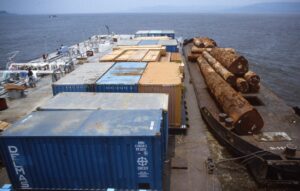 International aid agencies are keen to take all necessary measures to contain the disease for which there is no vaccine.
In response to the outbreak and the compounding security situation in North and South Kivu, the UK Foreign, Commonwealth & development Office (FCDO) has updated its strict travel advisories for the region:
- Travel: the FCDO strongly advises against all travel to the eastern provinces of the DRC. This includes Ituri, North Kivu, South Kivu, Maniema, Tanganyika, Haut-Uélé, and Haut-Lomami.
- Border closures: due to health screenings or sudden security developments, border crossings between the DRC, Uganda, and Rwanda may close at very short notice.
- Active conflict zones: the security situation remains highly unstable. Rebel groups and military forces (including M23 rebels and the Rwanda Defence Forces) have captured major eastern cities and surrounding areas, including Goma, Bukavu, and Uvira. Goma and Bukavu airports have been attacked, and commercial flights are no longer operating from them.
- Limited Support: due to these severe conditions, the UK government has virtually no capacity to provide in-person consular assistance to citizens outside the capital city of Kinshasa.
Transmission: how It Spreads and How to Avoid It
The current epidemic is caused by the Bundibugyo ebolavirus strain. Crucially, health authorities note that unlike more common outbreaks like the Zaire strain, there are currently no licensed vaccines or specific antiviral treatments approved for the Bundibugyo strain, making prevention for now the best way to protect yourself .
Ebola is not airborne and does not spread through the air. It is transmitted via:
- Direct Contact: touching the blood, secretions, organs, or other bodily fluids (such as saliva, sweat, vomit, urine, or semen) of an infected person who is showing symptoms or has died.
- Contaminated Objects: interacting with surfaces, clothing, bedding, or medical equipment contaminated with these infected fluids.
- Animal Spillover: handling, hunting, or consuming infected “bushmeat” (such as fruit bats, monkeys, or forest antelopes).
To further avoid the virus, it is recommended to do the following:
- Practice strict hygiene: wash hands frequently with soap and clean water, and/or use an alcohol-based hand sanitizer.
- Maintain physical distance: stay away from anyone displaying symptoms of the virus (such as sudden fever, intense weakness, muscle pain, vomiting, or unexplained bleeding).
- Do not touch the deceased: avoid traditional burial rituals that involve washing or touching the body of someone suspected to have died from Ebola.
- Avoid bushmeat: avoid handling or consuming raw or undercooked wild animal meat entirely.
Information provided by DR Congo:
More Reading:
- United Nations Report: https://news.un.org/en/story/2026/05/1167534
- UK Foreign Travel Advice: FCDO Travel Summary for the Democratic Republic of the Congo
- BBC News Report: DR Congo Ebola Outbreak Updates