
The Ghana Ports and Harbours Authority (GPHA) has issued a circular advising that the Port Facility Security Committee (PFSC) has recommended the introduction of...
News
BUDD News
Stricter Controls and Heavy Fines for Seabed Damage in the Mediterranean
BUDD Marseille would like to draw your attention to the heightened surveillance and severe penalties regarding seabed damage caused by non-compliant anchoring in the French Mediterranean.
- Increased Surveillance and Severe Fines for damage caused by anchoring
Maritime authorities, environmental police, and park rangers across the French Mediterranean coast have drastically intensified surveillance to prevent inadvertent seabed damage due to non-compliant anchoring.
- Vessel operators face severe financial and legal penalties if their anchors or chains damage the protected underwater ecosystems.
- Recent operations by park rangers and marine authorities — such as heightened patrols in the Port-Cros National Park in the South of France — have caught and penalized vessel operators following real-time on-water, drone, and underwater diver inspections.
- A recent case involving a large Italian motorboat revealed that a single anchor pull uprooted an entire square metre of protected seagrass, which immediately resulted in legal proceedings and fines.
- Under Article L. 415-3 of the French Environmental Code, damaging protected flora carries sanctions of up to €150,000 in fines and up to 3 years of imprisonment for individuals.
- Under Article 131-38 of the French Penal Code, corporate entities (e.g., shipowners or chartering companies) face fines up to five times this amount (€750,000).
Please find the English translation of the articles of the French Environmental Code here.
- Why the Posidonia oceanica Is Strictly Protected
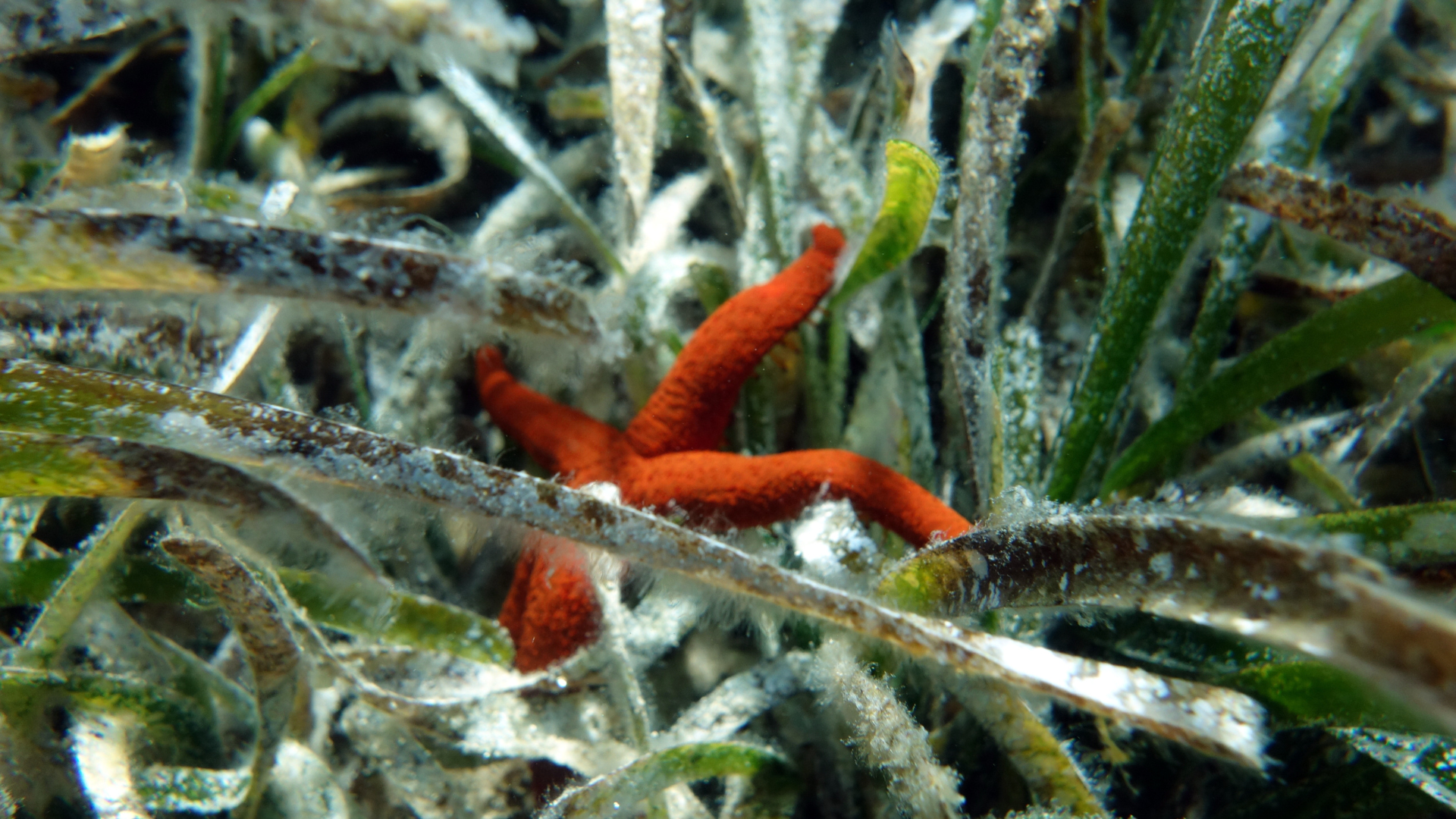
To understand why enforcement has reached such a strict level, operators must understand the ecological value and extreme fragility of Posidonia oceanica, commonly known as “the Lungs of the Mediterranean”.
- Unlike regular algae, Posidonia is a complex flowering marine plant that grows at an exceptionally slow rate of roughly one centimetre per year, meaning damaged zones can take centuries to recover naturally.
- A single anchor drop can rip up to 250 leaves at once, while dragging chains plow through expansive beds, causing widespread and long-lasting destruction.
- The Mediterranean Posidonia acts as essential feeding, breeding, and nursery grounds for more than 20% of all Mediterranean marine species. It further produces 14 to 20 litres of oxygen per square metre a day.
- Posidonia sequesters carbon dioxide at rates up to 35 times faster than tropical rainforests, while its root systems and dead leaf deposits stabilize the seabed and protect beaches from severe wave erosion.
- Loss Prevention Guidelines
To safeguard your vessel against heavy liabilities, detentions, and environmental fines, we recommend implementing the following protocols:
- Avoid Dark Seabed Areas: Never drop anchor over dark patches, which typically indicate deep and dense seagrass meadows.
- Target Clear Sand: Ensure your vessel anchors strictly within visible sandy patches (white seabed areas) or utilizes certified ecological mooring buoys (ZMEL) where available.
- Utilize Helpful Apps: Crew should leverage specialized real-time mapping tools, such as the DONIA application, to verify the seabed composition before anchoring.
- Control Chain Movement: Ensure proper anchor scope is maintained to prevent swinging anchor chains from dragging across and sweeping nearby protected vegetation.
Information provided by Budd Marseille (general.marseille@budd-pni.com).